Review: In This Home We Laugh, We Play
As a designer who has spent countless hours digitizing and stitching out files for clients, I have learned that not every cute phrase translates well into thread. When I first encountered In This Home We Laugh, We Play, We Jingle All the Way, my initial reaction was one of cautious optimism. The phrase is undeniably charming, tapping into that warm, nostalgic holiday spirit that drives so much of our seasonal sales. However, charm alone does not make a viable embroidery project. I needed to know if this design could hold up under the needle, especially when applied to real-world items like custom apparel and home decor.
The visual personality of this piece leans heavily into whimsical typography. It is not just text; it is a graphic arrangement meant to evoke movement and joy. For those of us in the Crafts and Graphics space, understanding the balance between legibility and decorative flair is crucial. This design attempts to walk that line, offering a playful aesthetic that fits perfectly within the holiday embroidery niche. But before you load it onto your machine for a bulk order of sweatshirts, let us break down how it performs in practice.
First Impressions and Visual Mood
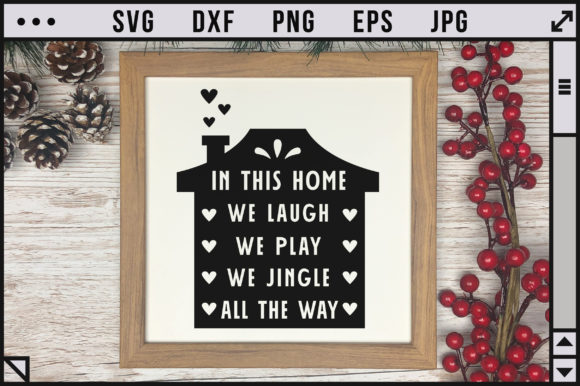
The layout of In This Home We Laugh, We Play, We Jingle All the Way suggests a stacked or curved arrangement, typical of modern digital embroidery files aimed at the handmade market. The mood is lighthearted and familial. It does not take itself too seriously, which is exactly what customers want for holiday gifts. When viewing the design as a graphic asset, the spacing appears generous enough to allow for proper stitch formation without excessive pull or distortion. This is a critical detail. Many free or low-cost SVGs fail because the letters are too close together, causing the thread to bridge gaps awkwardly. From a reviewer’s standpoint, this design seems to respect the physical limitations of thread.
I imagine this working beautifully on a neutral-toned tote bag design or a cozy cream-colored pillow cover. The contrast between dark thread and light fabric would highlight the playful curves of the lettering. However, the true test lies in the stitching process. Does it rely too heavily on dense fill stitch areas that might stiffen the fabric? Or does it utilize a smarter combination of satin stitch outlines and running stitch details? Without seeing the specific stitch file, we must assume a standard approach, but the visual weight suggests it is manageable for most home machines.
Real-World Application Scenarios
Let us consider a specific scenario. You are preparing a custom embroidered tote bag for a client who wants a unique holiday gift. You choose a heavy canvas material. Here, In This Home We Laugh, We Play, We Jingle All the Way shines. The sturdy fabric can support the stitch density required for clear lettering. The result is a personalized gift that feels substantial and high-quality. Customers appreciate when the embroidery looks crisp rather than messy, and this type of phrase-based design often delivers that clarity if hooped correctly.
Another strong use case is sweatshirt embroidery. A heather grey crewneck with this phrase stitched across the chest in deep forest green or classic red thread creates an instant bestseller for any Etsy seller. It appeals to families looking for matching holiday outfits. The design’s length means it will span a significant portion of the chest area, making it a statement piece. For small shop products, this visibility is key. It catches the eye in printable mockups and stands out in crowded online marketplaces.
However, I would hesitate to use this exact layout on baby embroidery projects unless scaled down significantly. Tiny lettering on stretchy onesies can be tricky. If the stitch density is too high, the garment may pucker. For caps and hats, the curved surface presents another challenge. The phrase is long, and fitting it onto a standard cap front panel might require arching the text aggressively, which can distort the readability of words like "Jingle." Always test on scrap fabric first when attempting curved surfaces.
Technical Considerations for Designers
When evaluating any digital embroidery file, we must look beyond the pretty preview image. How does In This Home We Laugh, We Play, We Jingle All the Way handle textured fabrics? If you are stitching on a waffle-knit towel or a fuzzy fleece blanket, fine details can get lost. I recommend using a stabilizer that matches the fabric weight. For stretchy materials, a cut-away stabilizer is non-negotiable to prevent distortion after washing.
Thread color contrast is another vital factor. This design relies on the shape of the letters. If you choose a thread color too similar to your fabric, the message disappears. Test it in black and white mockups to ensure the silhouette remains distinct. For commercial embroidery projects, consistency is king. Ensure that your thread colors align with your brand palette while maintaining readability.
One area requiring careful attention is the word "Jingle." Depending on the font style used in the specific graphics file, the dot over the 'i' or the tail of the 'g' might be delicate. In embroidery, tiny isolated elements can sometimes pop off or unravel if not properly tied off. Inspect small details in the digitized version before committing to a full production run. If you are creating an applique design variant, ensure the placement lines are accurate to avoid misalignment.
Commercial Viability and Brand Trust
For craft business owners, the value of a design lies in its versatility and customer appeal. In This Home We Laugh, We Play, We Jingle All the Way offers high giftability. It is the kind of phrase that makes a recipient smile, fostering emotional connection. This drives buyer engagement and repeat business. When used on items like aprons or kitchen towels, it adds a layer of warmth to the home, enhancing the perceived value of the handmade product.
However, professionalism matters. A sloppy stitch-out damages brand consistency. Before listing this as a finished product or selling it as a design asset, verify the license terms. Since the source describes it as an SVG for various crafts including iron-on vinyl and sublimation, you must confirm if the embroidery file version carries the same commercial rights. Never assume. Check whether the design works for both personal and commercial projects explicitly.
Ultimately, this design fits well within the holiday embroidery category. It is not overly complex, making it accessible for hobbyists, yet stylish enough for boutique branding. By paying attention to hoop size, fabric texture, and stitch density, you can transform this simple phrase into a standout item. Whether you are decorating a nursery or creating merchandise for a craft fair, practical judgment ensures your final product reflects the quality your customers expect.