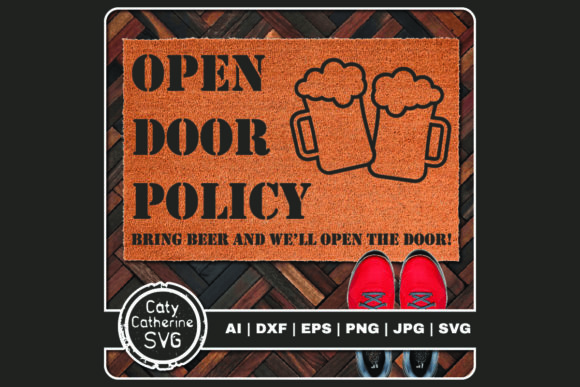
Review: Open Door Policy Bring Beer Design
As an embroidery designer who has spent years digitizing files and testing them on everything from delicate baby onesies to heavy-duty canvas tote bags, I have learned that a design’s success is not just about how it looks on a screen. It is about how it behaves under the needle. When I first encountered Open Door Policy Bring Beer, my initial reaction was one of amused recognition. This is not your typical floral motif or monogram. It is a statement piece, rooted in humor and hospitality, designed by Caty Catherine. But does this funny doormat-inspired concept translate well into the world of thread and fabric?
I decided to put this design through its paces, evaluating it not just as a digital asset in the Crafts and Graphics categories, but as a viable component for real-world handmade products. Here is my practical assessment for fellow embroidery designers, Etsy sellers, and craft business owners.
First Impressions and Visual Personality
The phrase "Open Door Policy Bring Beer" carries an immediate mood of casual warmth and irreverent fun. Visually, the layout suggests a bold, straightforward approach. In embroidery, clarity is king. If the text is too intricate or the spacing too tight, the message gets lost in a sea of stitches. From what I can gather from the source description, this design originates as an SVG cut file, which often implies clean lines and distinct shapes. For an embroidery project, this is a promising start. Clean vectors usually translate to cleaner stitch paths, reducing the risk of thread breaks or messy jump stitches.
The theme naturally leans toward home decor and casual apparel. It feels right at home on a kitchen towel or a sturdy apron, but it also has the potential to shine on custom apparel like sweatshirts or tote bags. The personality of the design is unapologetically social, making it an excellent candidate for personalized gifts for housewarmings, bachelor parties, or just because.
Real-World Application and Stitching Performance
To test the viability of Open Door Policy Bring Beer, I imagined applying it to several common substrates. Let’s start with a classic: the canvas tote bag. Tote bags are a staple for small shop products and craft fair merchandise. The texture of canvas provides a stable base for embroidery, allowing the thread to sit nicely without sinking in. A design with this kind of humorous punchline works exceptionally well here because it turns a utilitarian item into a conversation starter.
Next, consider custom apparel, specifically a heavyweight cotton sweatshirt. Sweatshirt embroidery requires careful attention to stitch density. If the design is too dense, it can cause the fabric to pucker or feel stiff against the skin. Since this is likely a text-based design, it may rely heavily on satin stitch or fill stitch techniques. Satin stitches offer a shiny, smooth finish that looks premium, but they can be tricky on textured fabrics. If the design uses fill stitches, it will provide better coverage and durability, which is crucial for items that will be washed frequently.
For those interested in creating embroidered patches, this design could be a standout. Patches allow for high-density stitching on a stable backing, meaning you can push the visual impact without worrying about garment distortion. A patch with this slogan could be sold as a standalone accessory or applied to denim jackets and caps, expanding its commercial appeal.
Navigating Technical Challenges
While the concept is strong, there are technical considerations every machine embroidery designer must address. First, let’s talk about hoop size. Text-heavy designs require enough horizontal space to remain legible. If you are working with a small hoop, such as a 4x4 inch hoop, you may need to scale the design down significantly. This risks making the lettering too small, where individual stitches might merge, causing the text to become unreadable. Always check the dimensions of the digital embroidery file before loading it into your machine.
Fabric choice is another critical factor. On dark fabrics, thread color contrast becomes paramount. A light-colored thread on a navy or black garment will pop, but you must ensure the stitch path is solid enough to cover the background fabric completely. Conversely, on thin or stretchy fabrics like jersey knits, using the proper stabilizer is non-negotiable. Without adequate support, the pull of the stitches can distort the fabric, ruining the alignment of the letters.
Additionally, since the source file is provided as an SVG and transparent PNG, it is important to note that these are not native embroidery formats like PES or DST. You will need to use embroidery software to convert or import these graphics into a machine-readable format. This step allows you to adjust stitch types, density, and underlay settings. Do not skip this step. Automatically converting a graphic without manual adjustment often leads to poor stitching quality.
Commercial Value and Brand Consistency
For Etsy sellers and creative entrepreneurs, the value of a design lies in its ability to engage buyers. Open Door Policy Bring Beer taps into a specific niche of humor that resonates with many customers. It is relatable, shareable, and giftable. When used in printable mockups or digital product previews, it stands out against more generic designs. However, professionalism is key. Ensure that the final stitched product looks clean and polished. Loose threads or misaligned text can damage your brand’s reputation.
This design fits well within a broader collection of holiday embroidery or casual home goods. It can be part of a series that includes other witty phrases, creating a cohesive brand identity for your small shop. Whether you are selling finished products or offering custom embroidery services, this design adds a layer of personality that customers appreciate.
Practical Designer Notes
Before you commit to producing a batch of items, follow these practical steps:
- Test on scrap fabric: Always stitch out a test sample on the same type of fabric you plan to use for the final product. This helps you identify any tension issues or density problems.
- Check thread color contrast: Use a color chart to select threads that stand out against your chosen fabric. High contrast improves readability and visual appeal.
- Review stitch density: If the design feels too stiff after stitching, reduce the density in your software. If it looks sparse, increase it slightly or add underlay stitches.
- Confirm licensing: Since this design is created by Caty Catherine, verify the license terms. Ensure you have the right to use it for commercial embroidery projects if you plan to sell finished items.
- Inspect small details: Zoom in on the design in your software. Look for tiny elements that might not stitch well. Simplify if necessary.
In conclusion, Open Door Policy Bring Beer is a charming and versatile design that, when handled with technical care, can elevate a variety of handmade products. It bridges the gap between digital graphics and tangible crafts, offering a fun twist for both personal enjoyment and commercial success. By paying attention to fabric texture, stabilizer choice, and stitch quality, you can ensure that this design delivers a professional and engaging finished product.