Reviewing the Air Force Legend Retirement Design
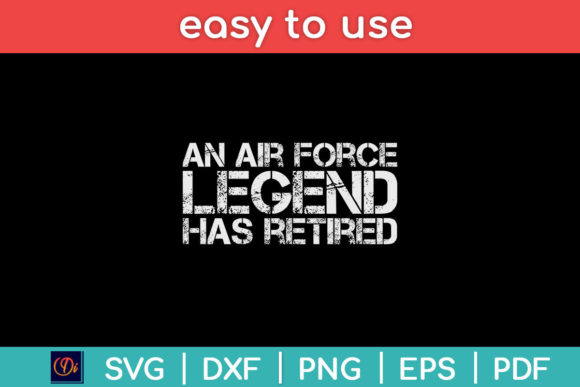
As a designer who has spent years digitizing and testing embroidery patterns, I approach every new machine embroidery design with a mix of curiosity and caution. We all know that what looks crisp on a computer screen does not always translate perfectly to fabric. Recently, I evaluated An Air Force Legend Has Retired Funny, a graphic intended for retirement celebrations. While the product description highlights its compatibility with Cricut and Silhouette as a print cut file, my focus was strictly on how this visual concept performs when translated into thread for real-world embroidery projects.
First Impressions and Visual Personality
The immediate mood of An Air Force Legend Has Retired Funny is celebratory yet respectful. It balances humor with the dignity expected of military service. For an experienced eye, the layout suggests a bold, statement piece rather than a delicate accent. The typography appears central to the design’s impact, which means clarity is paramount. In the realm of Crafts and digital Graphics, this type of design relies heavily on clean lines and sufficient spacing between letters to prevent thread bridging.
When I visualize this as an embroidery file, I see it working best as a focal point. It is not a subtle background pattern; it demands attention. This makes it ideal for items where the recipient wants to proudly display their service history and their new status as a retiree. The "funny" aspect suggests a lighthearted tone, which softens the formality often associated with military insignia, making it approachable for family gatherings and casual parties.
Real-World Application: The Custom Sweatshirt Scenario
To test the viability of this design, I imagined a specific client request: a custom sweatshirt embroidery project for a father retiring after twenty years of service. The goal was a personalized gift that he could wear to his farewell party and subsequent casual outings. In this scenario, An Air Force Legend Has Retired Funny would be placed centrally on the chest or across the upper back.
For a sweatshirt, the fabric texture is plush and forgiving, which helps hide minor imperfections in stitch alignment. However, the density of the text requires careful management. If this design were converted into a fill stitch heavy format without proper underlay, it could become stiff and uncomfortable against the skin. A skilled digitizer would likely use a combination of satin stitch for smaller elements and a lighter fill for larger blocks to maintain flexibility. The result would be a high-value handmade product that feels premium rather than bulky.
Material Considerations and Stitching Clarity
One of the critical factors in evaluating any digital embroidery file is how it interacts with different materials. For An Air Force Legend Has Retired Funny, contrast is key. On dark navy or black fabrics, which are common in military-themed apparel, using light thread colors like white, silver, or gold ensures readability. Conversely, on light-colored tote bag design canvases, darker threads would provide the necessary pop.
I must advise caution with textured fabrics. If you are stitching this onto a rough linen or a highly textured towel, the fine details of the lettering might get lost. In such cases, increasing the stitch density slightly or opting for a bolder font weight during the digitizing phase can preserve legibility. For smooth fabrics like cotton twill or polyester blends, the design should render cleanly, provided the machine tension is correctly calibrated.
Challenges with Small Hoops and Curved Surfaces
While this design shines on flat, large surfaces like aprons or pillow covers, it presents challenges on curved or small items. Attempting to fit this phrase onto a standard baseball cap requires significant scaling down. When text becomes too small, the individual stitches may merge, turning distinct letters into unreadable blobs. Therefore, I would not recommend this specific layout for small hoop size applications unless it is significantly simplified or split into multiple lines with generous spacing.
Similarly, for an embroidered patch, the edges need to be well-defined. If the design extends too close to the border, the satin stitch edge might not have enough room to anchor properly, leading to fraying over time. For patches, adding a wider margin around the text is essential for durability, especially if the item will undergo frequent washing.
Commercial Viability for Etsy Sellers
For Etsy sellers and small shop owners, An Air Force Legend Has Retired Funny represents a strong niche product. Military retirements are consistent events throughout the year, creating steady demand for custom apparel and gifts. However, success depends on presentation. Using high-quality printable mockup images that show the design on various garments can help buyers visualize the final finished product.
It is crucial to note that since the original product is described as a print cut file for Cricut and Silhouette, you cannot simply upload it to an embroidery machine. You must either find a pre-digitized version or hire a professional to convert the vector graphics into a stitch file. Selling unfinished digital files without proper licensing or conversion rights can lead to customer dissatisfaction. Always confirm the license terms before offering commercial embroidery services using this asset.
Practical Designer Notes for Best Results
Before committing to a full production run, follow these practical steps to ensure quality:
- Test on Scrap Fabric: Always stitch out a sample on the same material you intend to use for the final item. This reveals any tension issues or color clashes.
- Check Thread Contrast: View your design in black and white mode on your computer. If the text disappears, the contrast is insufficient for clear visibility.
- Use Proper Stabilizer: For stretchy fabrics like t-shirts, use a cut-away stabilizer to prevent distortion. For woven fabrics like tote bags, a tear-away may suffice, but hooping stability is vital.
- Inspect Small Details: Zoom in on the digitized file to check for tiny jumps or unnecessary trims that could slow down production or cause thread breaks.
- Verify Licensing: Ensure you have the right to use the design for commercial sales. Many free or low-cost graphics are for personal use only.
In conclusion, An Air Force Legend Has Retired Funny has strong potential as a centerpiece for retirement gifts. Its strength lies in its clear message and emotional resonance. However, its success in embroidery depends entirely on proper digitizing, appropriate material selection, and careful attention to stitch quality. By treating it as a serious design element rather than just a quick clipart addition, crafters and professionals can create memorable, high-quality items that honor the recipient’s service with both style and respect.